Thursday, 19 January 2012

Genetics questions

We had a couple of interesting genetics related questions from Tim that we decided it was worth making a full post about.

The first was "So genes do change to take account of environmental factors then where does that leave the inuit peoples who have low incidence of MS and a shortage of sunlight?"

The environment can influence the genome in at least three ways which differ in timescales:

Genes change over time (generations) as a result of natural selection (genetic variants that give us an advantage to live in certain conditions become more common over time). An elegant recent study comparing the genomes of 61 different populations across the world has shown how our genomes have adapted to the different climates over the world.

Within our own lifetime, the environment influences our epigenome (chemical changes to the DNA sequence). A recent notable example is how smoking influences DNA methylation (adding of methyl groups) of the F2RL3 gene.

We will spend more time talking about epigenetics in the near future.

More immediately (within minutes/hours), genes respond to the environment through gene-environment interactions. For example we have shown that circulating vitamin D controls the levels of genes involved in MS.

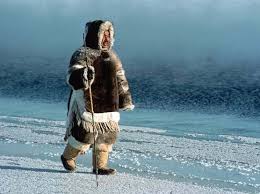
Inuit populations such as those in Canada live at high latitudes (and thus low sunlight exposure) but have a low rate of MS. In fact the only cases of MS identified in this group are from people who have a mixed race background (Caucasian and Inuit parents). This may argue that vitamin D may not be important for MS. However, Inuits have a very,very high frequency of a gene that is strongly protective for MS- this is the concept of a gene-environment interaction- you need the 'wrong' genes being exposed to the 'wrong' environment. Having just the genes or just low vitamin D is not enough- you need both.

If vitamin D is a factor the Swedish migrant study would have had different results, would it not?

No, again this is the same gene-environment concept as before. Iranians for example have a similar genetic background to Caucasians (they carry a high frequency of MS risk genes), but in Iran they are not as likely to be exposed to sunshine/vitamin D deficiency as they are in Sweden. In Sweden they have the wrong environment, which acts on their genes and increases their risk of MS.

12 comments:

  1. The linked abstract is about Inuit-Caucasian people but it doesn't say that only mixed-race Inuits get MS.

    ReplyDelete
  2. This has been studied intensively in Canada- no individual with purely First Nations/Inuit heritage has been found to have MS- e.g.
    http://www.ncbi.nlm.nih.gov/pubmed/8719043

    ReplyDelete
  3. On our street, two of us, weirdly, both have MS. There's me (white, British) and an Asian kid a few doors down (British, Pakistani). I wonder if he has a similar genetic background to Caucasians?

    ReplyDelete
  4. Please say something about this-
    www.msra.org.au/progress-environmental-effects-ms-especially-vitamin-d

    It says that sun exposure is linked to MS risk independent of Vit D levels

    ReplyDelete
  5. More detail here www.cresunandhealth.org.au/story/msd.jsp

    ReplyDelete
  6. "I wonder if he has a similar genetic background to Caucasians?"

    I think so- studies in Indian MS patients show they have the same genes that increase MS risk as those as Caucasian MS patients.

    ReplyDelete
  7. "It says that sun exposure is linked to MS risk independent of Vit D levels"

    This study by the Ausimmune team is interesting in that it shows that measures of MS'ers sunshine exposure seems to be associated independently of vitamin D levels taken at the time of MS onset (people who developed MS reported lower sunshine exposure before they got MS and their blood level at MS onset had lower levels of vitamin D than controls).

    BUT, the issue is that the researchers did (could) not measure vitamin D levels at the same time as sunshine exposure- so they can't actually make a definitive conclusion that sun exposure acts independently of vitamin D.

    As Alberto Ascherio and colleagues wrote about the paper:
    "Although a direct protective effect of UV is possible, it is not necessary to explain the results of Lucas et al., which are consistent with the simpler hypothesis of a protective effect of vitamin D"

    ReplyDelete
  8. It seems there is a slim chance that this UV ray theory is right. Maybe we should try to get some sun when possible in addition to taking vit d, just in case

    ReplyDelete
  9. Re: Australian Vitamin D study. I note that you state that Albert Ascherio purported to make comments about 'the paper'. As far as I am aware the results of this section of the Ausimmune study are not due to be published in the journal Neurology until July. Where and what are you referring to please in regards to comments claimed to have been made by Ascherio?

    ReplyDelete
  10. Lucas study-

    http://www.ncbi.nlm.nih.gov/pubmed/21300969

    Ascherio response-

    http://www.ncbi.nlm.nih.gov/pubmed/21968847

    Both paywalled.

    ReplyDelete
  11. Moved to Check Q & A together
    Brightangel said...

    My apologies, Lucas will publish in Neurology in July in relation to EBV.
    Sunday, January 22, 2012 12:41:00 PM

    ReplyDelete
  12. Sunshine MS and Vitamin D

    If part of the vitamin D effect is in utero (in the womb), as could be suggested by the month of birth effect. Then the issue of vitamin D levels in MSers at onset etc may be irrelevant. This adds an extra level of complexity

    ReplyDelete