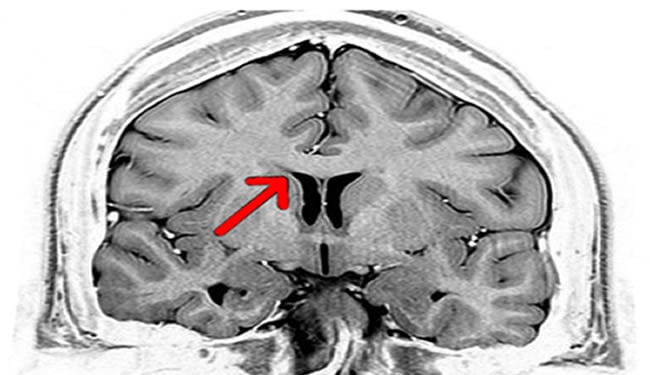
BACKGROUND:Corpus callosum (CC) is a common target for multiple sclerosis
(MS) pathology. We investigated the influence of CC damage on physical
disability and cognitive dysfunction using a multimodal approach.
METHODS: Twenty-one
relapsing-remitting MS patients and 13 healthy controls underwent
structural MRI and diffusion tensor of the CC (fractional anisotropy;
mean diffusivity, MD; radial diffusivity, RD; axial diffusivity).
Interhemisferic transfer of motor inhibition was assessed by recording
the ipsilateral silent period (iSP) to transcranial magnetic
stimulation. We evaluated cognitive function using the Brief Repeatable
Battery and physical disability using the Expanded Disability Status
Scale (EDSS) and the MS Functional Composite (MSFC) z-score.
RESULTS: The
iSP latency correlated with physical disability scores (r ranged from
0.596 to 0.657, P values from 0.004 to 0.001), and with results of
visual memory (r = -0.645, P = 0.002), processing speed (r = -0.51,
P = 0.018) and executive cognitive domain tests (r = -0.452, P = 0.039).
The area of the rostrum correlated with the EDSS (r = -0.442,
P = 0.045). MD and RD correlated with cognitive performance, mainly with
results of visual and verbal memory tests (r ranged from -0.446 to
-0.546, P values from 0.048 to 0.011). The iSP latency correlated with
CC area (r = -0.345, P = 0.049), volume (r = -0.401, P = 0.002), MD
(r = 0.404, P = 0.002) and RD (r = 0.415, P = 0.016).
CONCLUSIONS: We
found evidence for structural and microstructural CC abnormalities
associated with impairment of motor callosal inhibitory conduction in
MS. CC damage may contribute to cognitive dysfunction and in less extent
to physical disability likely through a disconnection mechanism.
The corpus callosum is the bridge between the two halves of the brain (hemisphere) with 200-250 million axonal connections. There are some people that lack a corpus callosum they have subtle
differences in brain function, there are also mice, called 129, that lack a corpus callosum. There may are subtle changes in the corpus callosum of MSers and so it may not be surprsing that changes in the transfer of information from one one side of the brain
The correlations were not strong (r=1 or r=-1 are strong, r=0 is no correlation) and the most significant effect was inrelation to volume and if the vloume/size shrinks it is because the nerves are disappearing and this would be there be expected to a have a more noticable effect.
Labels: corpus callosum, MRI